 LunarSolar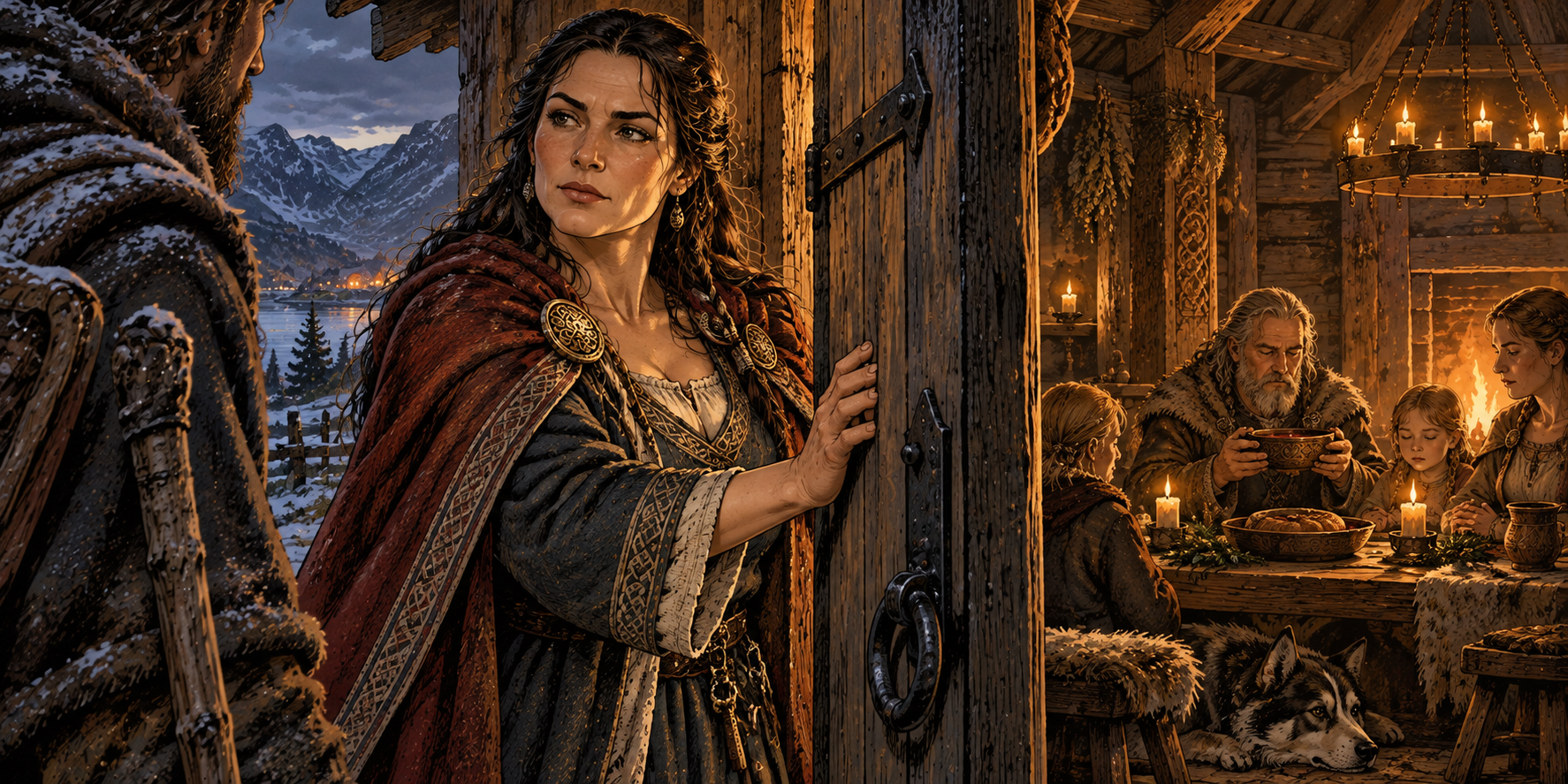
The stories of sky and feast
Álfablót
Ancestors Night
Álfablót. The door closes on a household's sacred life.
A traveller turned away
Around the beginning of the eleventh century, the Christian poet Sighvatr travelled through Sweden and met a door that would not open for him. His Austrfararvísur gives the reason in a woman's voice: the people inside were holding álfablót, an offering to elves, and she feared Óðinn's anger. Ordinary hospitality yielded to the demands of the rite.
Sighvatr complains bitterly about his rejection. From the other side of the door, the scene shows a woman deciding who could enter her household's sacred space. The boundary had force. Belonging to the gathering was more than finding shelter for a night.
Powers close to home
Álfar could be connected with local places and addressed through offerings. Kormáks saga tells of elves inhabiting a hill; a healer instructs a wounded man to redden it with bull blood and provide the flesh as a feast. Their help is sought for something immediate and bodily.
Relationships with dead kin also remained active through memorial drinking, graves and stories of continued favour. LunarSolar brings this theme forward in the name Ancestors Night. Elves and ancestors meet in interpretations of the old religion, while Sighvatr's particular scene keeps its own named powers and its guarded door.
A dark interval
Here Álfablót falls on the new moon between Harvest Moon and Winter Nights. The calendar turns from a bright harvest landmark towards the darkness of a coming winter. Ancestors Night gives a place to household memory and the bonds that reach beyond those currently gathered around the table.
Sources
Sighvatr's stanza and Jonas Wellendorf's study; Kormáks saga, chapter 22.