 LunarSolar
VIKING AESTHETICS
A past full
of colour.
Earth reds, warm whites, greens and deep blues. An archaeological starting point, interpreted for a contemporary northern world.
#fcf7f1#f3da3f#e9bb2a#d09024#c06b0e#ff7a2d#fe5706#fd331f#b44939#2c2419#51a584#5da88a#1e2e47#323d3f#1e2223#99afbc#99a3af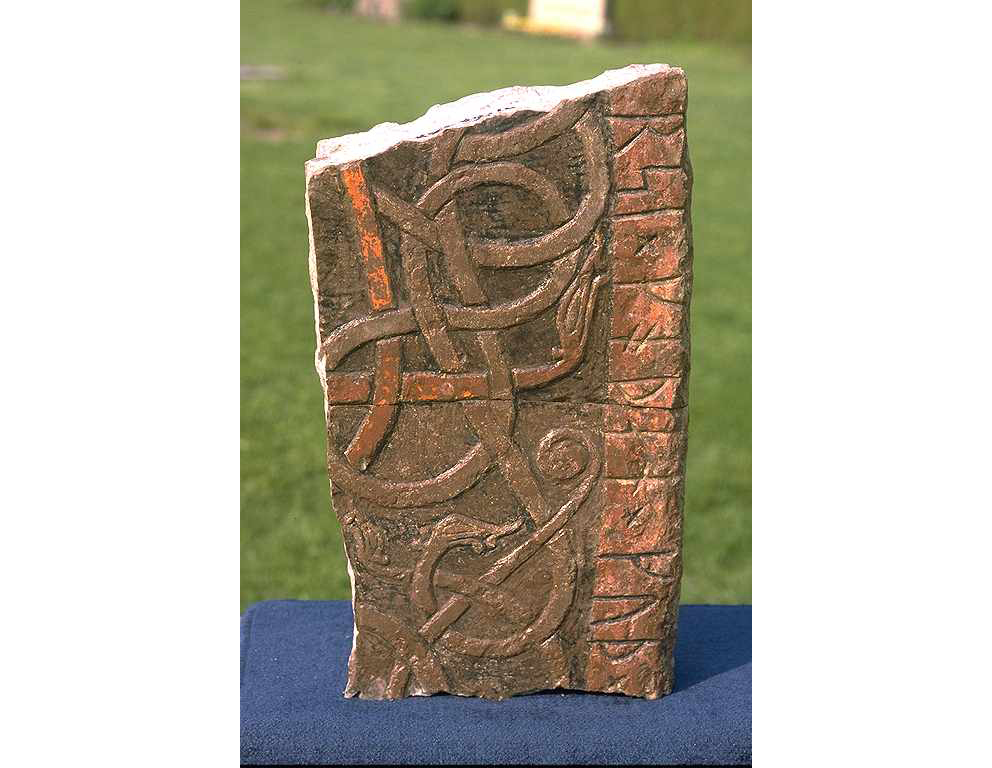
Where this palette comes from
LunarSolar's northern palette draws on reconstructed Danish painted wood. A 2017 museum report combines finds from Jelling, Hørning, Grimstrup and Trelleborg, mainly around 900–1100. It offers twelve paint recipes with approximate NCS references. Our seventeen digital swatches are a later interpretation, not measured ancient RGB values.
Read the original reconstruction report →
Material changes the colour
Pigment, binder, wood grain, paint thickness and lighting all affect appearance. Experimental painting with oil and egg makes those differences visible. The reconstruction also includes a modern drying additive, so reproducing a recipe is not the same as recovering an untouched Viking surface.
EXARC: painting Viking Age woodwork →
A wider Scandinavian story
Surviving Swedish runestones retain paint traces, and textile dyes tell another material story. Colours need not fit one wood-paint chart. The surviving objects cover particular places and times, while many surfaces and colours have been lost.
Swedish National Heritage Board: runes, images and colour →
How we use it
Warm white and near-black give the interface clarity. Ochre brings the Sun’s warmth; greens and blues connect landscape and sky. Richer illustration can explore the whole palette. This is an artistic direction informed by archaeology, with space for the colours of weather and light.