 LunarSolar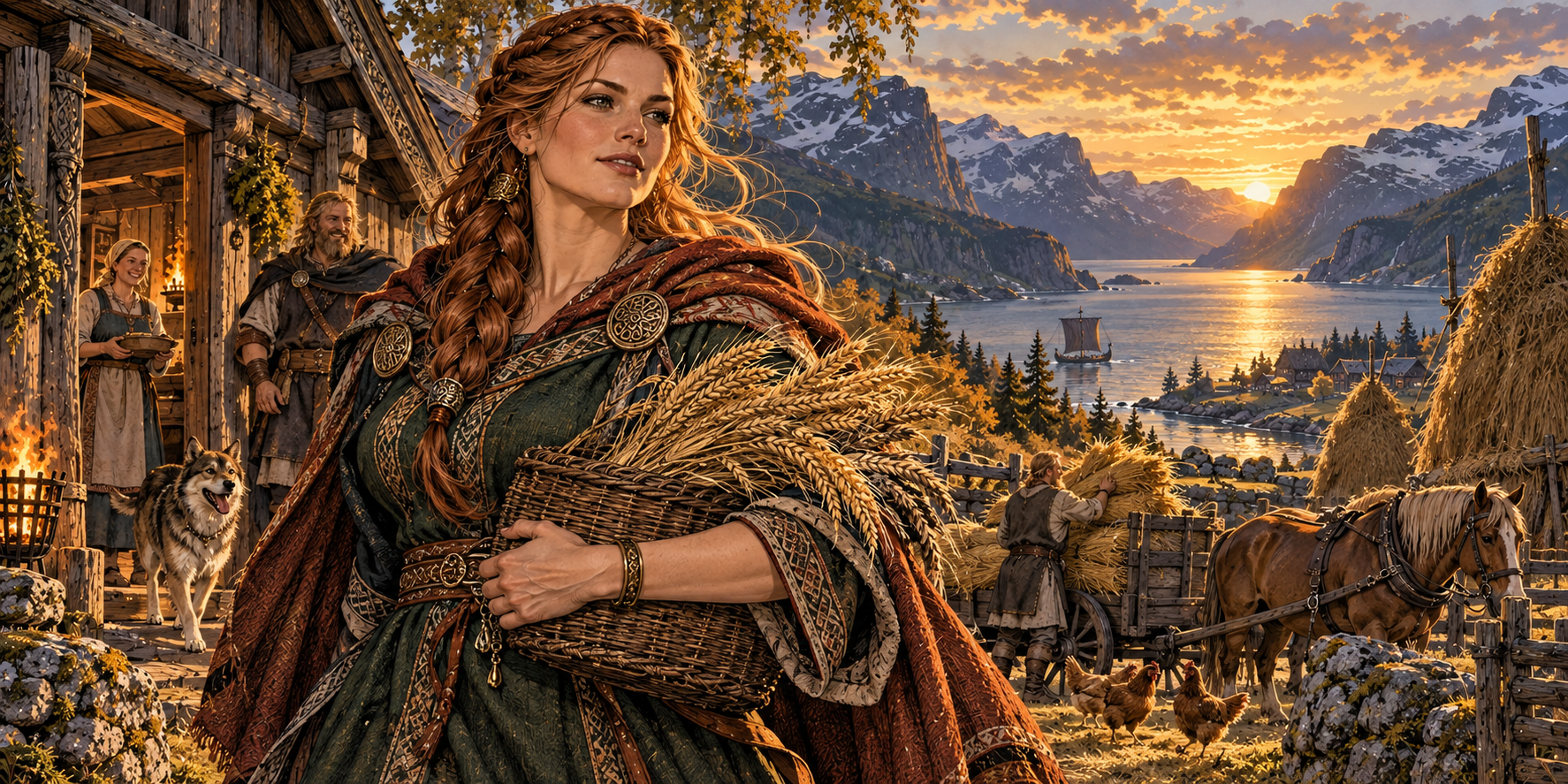
The stories of sky and feast
Autumn Equinox
Autumn Equinox. The light crosses towards winter.
What the household will keep
At the September equinox the Sun crosses the celestial equator southward. Northern days continue to shorten, and the year's bright working half approaches the world of longer nights. Summer's efforts now have weight in grain, fodder, livestock and the provisions a household can keep.
The equinox is an astronomical crossing, one shared point in the Sun's annual course. Day and night are close in length; the precise local day of equal visible daylight also depends on latitude and the atmosphere. Beyond the calendar, the change is something people can encounter in a low evening Sun or a journey completed before darkness.
A named turning in time
Summer and winter were the principal Old Norse half-years. Autumn still had its own vocabulary and tasks inside that wider structure. Snorri's list of time-names uses jafndægri, equinox, in describing the year's transitions. Watching the light and naming the season helped counted time stay connected with the world people worked in.
The approaching winter also drew people into gatherings. Autumn sacrifices, welcoming feasts and local offerings could connect provisions and friendship with the favour of unseen powers. Those acts belonged to particular households and traditions, with their own recipients and meanings.
Towards Winter Nights
LunarSolar uses the autumn equinox to locate the new moon and then the full moon of Winter Nights. Harvest Moon and Ancestors Night lead towards that gathering. The Sun supplies the seasonal crossing while the Moon gives the calendar its succession of bright and dark landmarks. Together they bring the coming winter into view.
Sources
National Weather Service, equinoxes; Skáldskaparmál, names of time; Gísla saga, welcoming winter.