 LunarSolar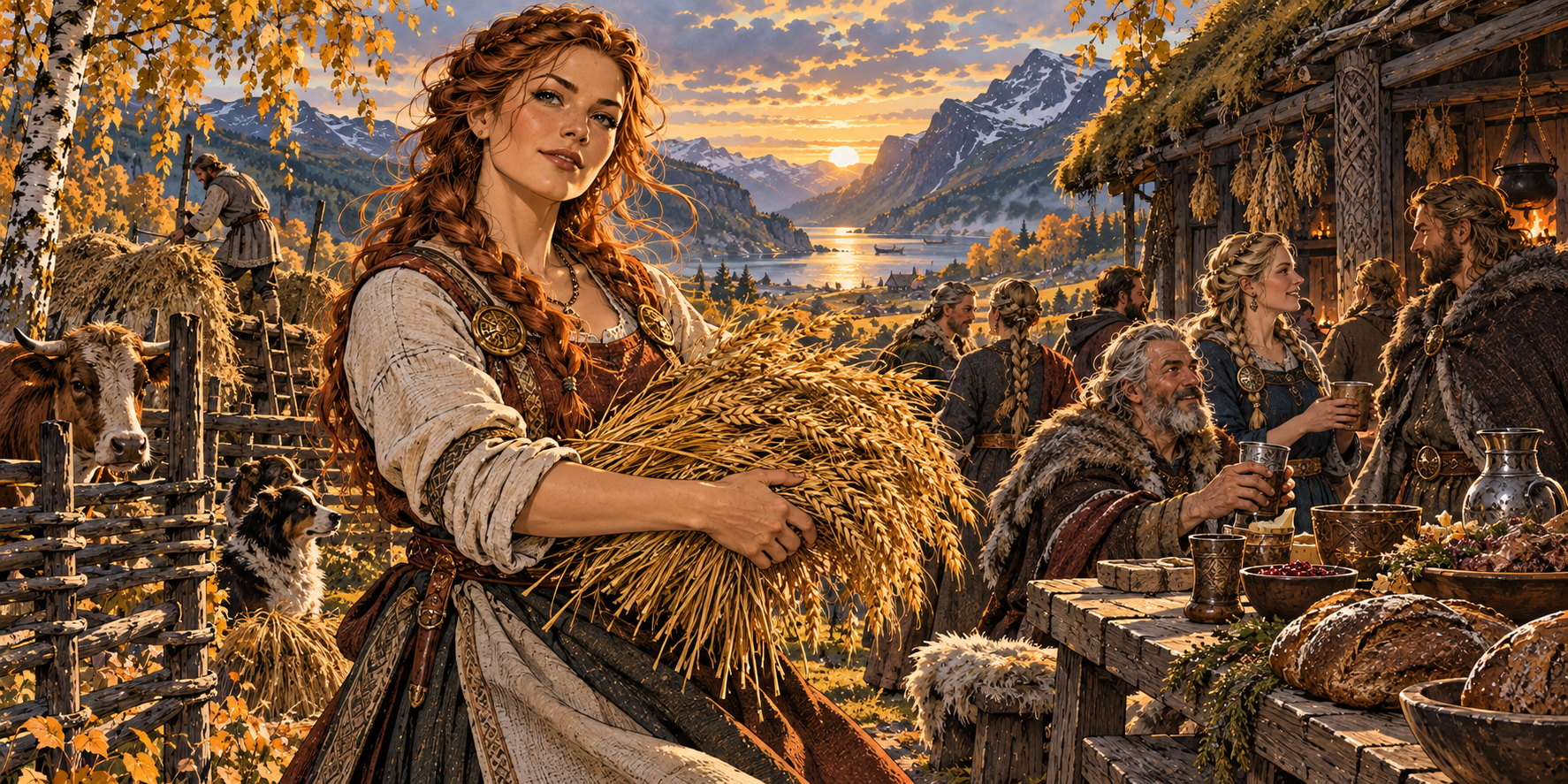
The stories of sky and feast
Haustblót
Harvest Moon
Haustblót. Gather the season's wealth before winter.
An autumn gathering
The work of summer had to become something a household could keep. Grain, fodder, animals and other provisions would carry people through the colder half of the year. Autumn gatherings brought together material abundance and the relationships needed to sustain it. Food offered to guests displayed a host's resources; food and other valuables offered to divine powers sought continuing favour.
Haustblót means autumn sacrifice. Egils saga places such a gathering at Gaular in Norway. In that crowded setting, Ǫlvir sees Solveig and falls in love. The gathering creates an opening for courtship, but her father rejects the proposed marriage as an unequal match. Plenty, desire and rank occupy the same scene.
The cost of a good season
In Gísla saga, Þorgrímr plans an autumn feast at Winter Nights and a sacrifice to Freyr. The god is associated with fruitful seasons, wealth and peace: the conditions that make a household flourish. The wider blót tradition includes animals killed, ritual food shared and blood used in the relationship with the sacred.
This places harvest within a world of work and obligation. What had been gathered could be eaten, stored, given to friends or dedicated to a power. Each use connected the household to someone beyond itself, and each had a cost.
Harvest Moon in LunarSolar
Here Harvest Moon names Haustblót, placed on the last full moon before Winter Nights. Its brightness gives the autumn sacrifice a lunar landmark. The familiar astronomical Harvest Moon follows a different selection, the full moon nearest the autumn equinox. LunarSolar's feast follows its coming winter threshold.
Sources
Egils saga, chapter 2; Gísla saga, Þorgrímr's Freyr feast.