 LunarSolar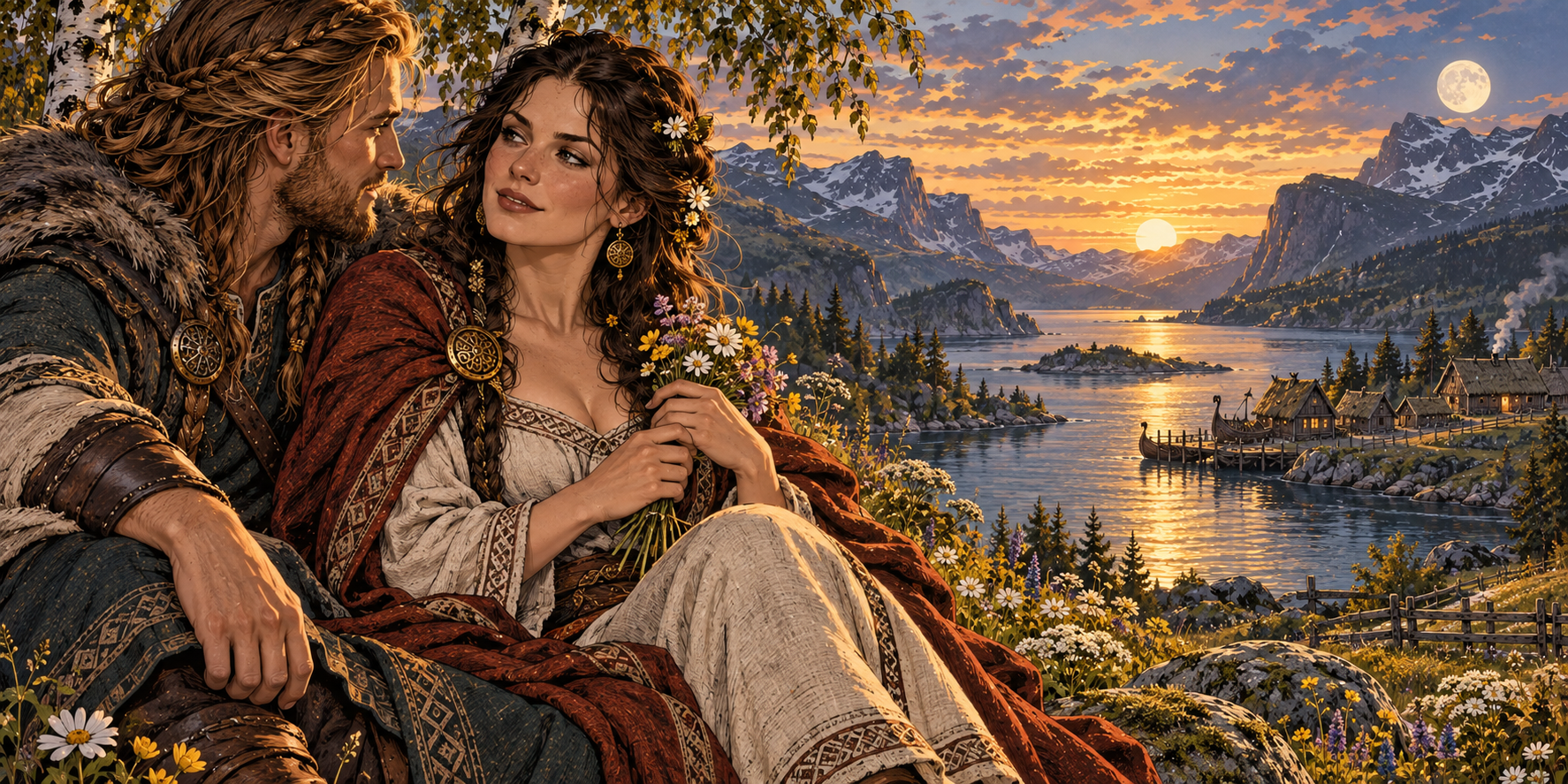
The stories of sky and feast
Miðsumar
Midsummer
Miðsumar. Long light, growing land and summer's promise.
The bright heart of summer
Summer was the productive half of the Old Norse year. Long daylight gave work and journeys room to unfold, while growing plants and animals held the household's future provisions. Miðsumar names the middle of that summer world. Its light could be enjoyed and used: there were fields to tend, routes to travel and people to meet.
Freyr gives a divine face to several of those conditions. Snorri associates him with rain, sunshine, fruitful seasons, peace and prosperity. Sól carries the Sun's course through the mythic sky. Together their stories connect light and growth with powers encountered in the landscape and in everyday fortunes.
A night thick with possibilities
Later Swedish midsummer folklore gives this season a rich magical life. Plants and dew could be gathered for their potency; ritual acts sought protection for livestock and crops. Young people searched for signs of future marriage, using flowers, dreams and regional customs. The records collected by Sweden's Institute for Language and Folklore bring desire, household concerns and the growing land into the same night.
These medieval and later traditions give midsummer its own continuing history. The greenery around a gathering, a prospective lover in a dream and a farmer's hope for healthy animals each reveal what people wanted from the season.
Summer's full moon
LunarSolar places its Midsummar feast on Sólmánuður's full moon. The summer solstice marks the Sun's annual turning; the feast follows lunar fullness. Two bright landmarks give the calendar a way to hold both the Sun's long course and the Moon's recurring rhythm.
Sources
Gylfaginning, chapters 11 and 24; Tommy Kuusela, “Midsommarnattens magi”.