 LunarSolar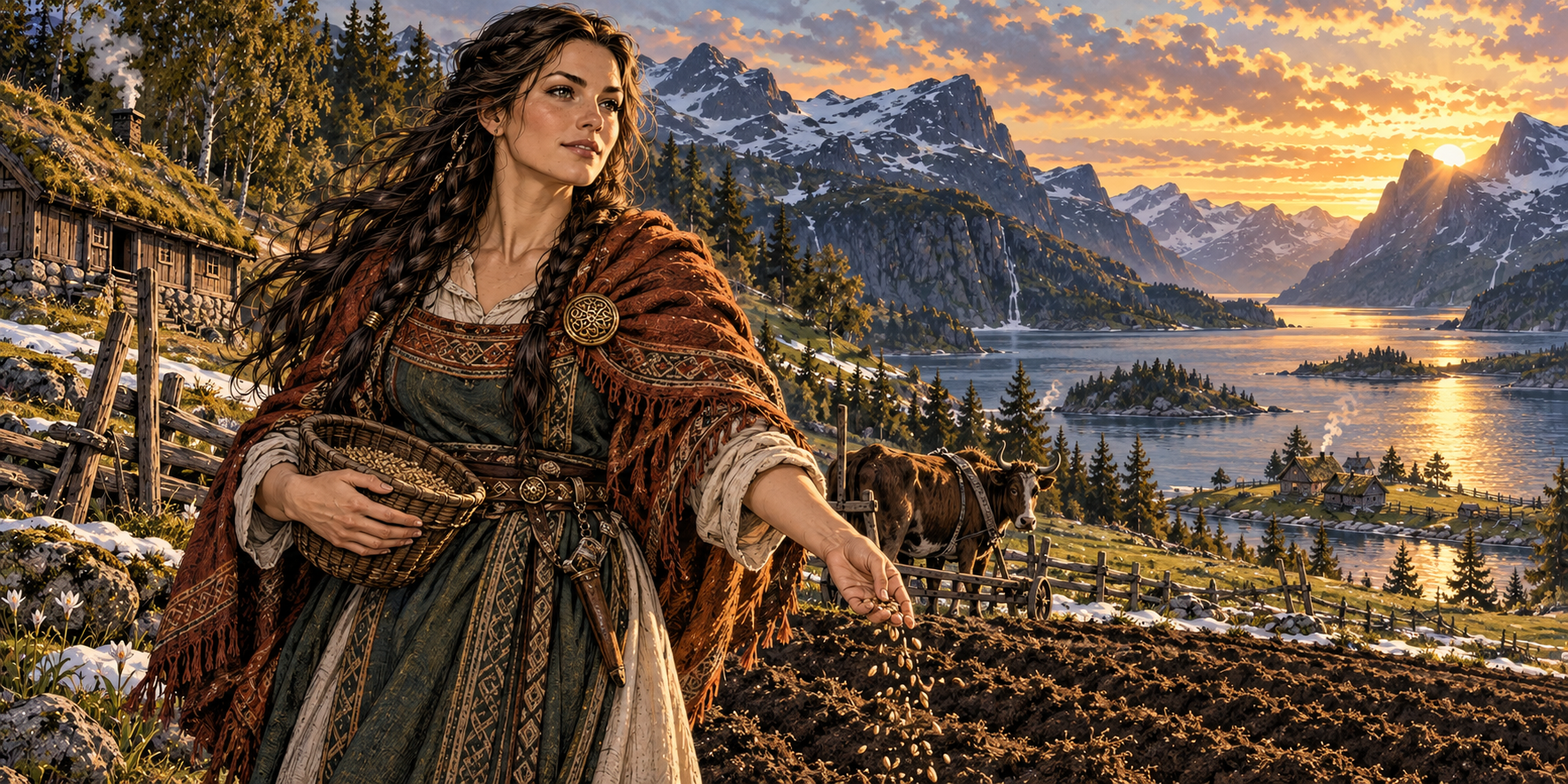
The stories of sky and feast
Spring Equinox
Spring Equinox. Light crosses towards the northern half of the sky.
The year's opening
At the March equinox the Sun crosses the celestial equator northward. Day and night stand close in length, and the northern world moves towards longer daylight. Ground, plants and animals respond in their own local time. For the household, the coming productive season begins to take shape in work still to be done.
The sky's crossing gives the calendar a shared landmark. The day when visible daylight exactly matches the night varies with latitude and the way the Sun appears through the atmosphere. The equinox itself follows the Sun's position: one crossing within its annual course.
Reckoning a changing world
Old Norse life was principally counted through summer and winter. Its language also had words for spring, autumn and the equinox, jafndægri. Snorri's time-name passage places these transitions within an ordered account of the year. A seasonal threshold could be understood through the horizon, the household's tasks and the names used to arrange ordinary life.
The changing light also belonged to Sól's narrative world. A visible motion could have a divine persona while still being watched, compared and counted. Seasonal time mattered because it told people when familiar activities and conditions would return.
The full moon nearby
LunarSolar uses the spring equinox as a reference for Victory Feast and Ostara, both placed on Einmánuður's full moon. Victory Feast carries the saga's summer-opening offering for success; Ostara brings the spring name whose history runs through Eostre and later Germanic reconstruction. The solar crossing and the lunar gathering give the opening year two ways to be seen.
Sources
National Weather Service, equinox and daylight; Skáldskaparmál, names of time; Ynglinga saga, seasonal sacrifices.