 LunarSolar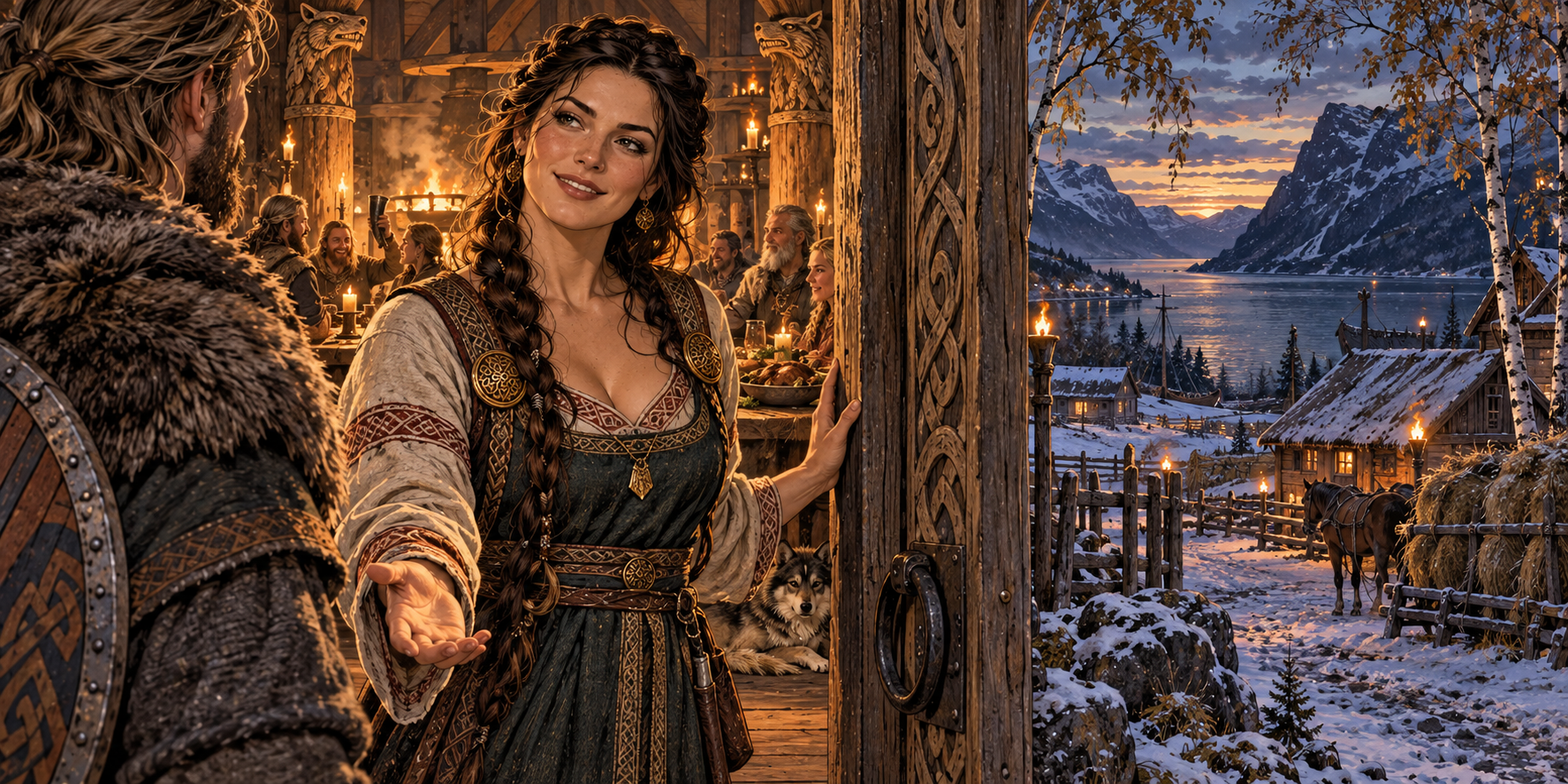
The stories of sky and feast
Vetrnætr
Winter Nights
Vetrnætr. Welcome winter, and know who stands with you.
The household gathers
The Old Norse year turned around two great halves, summer and winter. Winter Nights marked the threshold into the cold half. Stored food, animals, shelter and dependable friends now carried a different weight. Hosting a feast brought those relationships into the house: guests arrived, provisions were opened, and the people who would face the coming season together could see one another.
Gísla saga gives this threshold a vivid place in its story. Þorgrímr prepares an autumn gathering to welcome winter and sacrifice to Freyr, inviting his brother and other prominent men. Nearby, Gísli also welcomes guests, after abandoning pagan sacrifice. The same season brings both households together, while their religious choices and loyalties lead them along different paths.
Prosperity and the unseen
Freyr's favour concerns the things a household needs: fruitful seasons, wealth and peace. Other saga accounts connect Winter Nights with dísablót, offerings to female powers. Those relationships place the year's turning within a world where the wellbeing of land and people could involve presences beyond the visible gathering.
The feast could strengthen friendship and display a host's standing, but the sagas also put it inside a world of rivalry and feud. A crowded hall did not dissolve those loyalties. Welcoming winter meant taking stock of one's place among other people as well as one's supplies.
A lunar threshold
LunarSolar places Winter Nights at the first full moon after the new moon following the autumn equinox. The Moon makes the crossing visible in the calendar. Harvest Moon and Ancestors Night lead towards it, with their own stories of provision, offerings and household bonds.
Sources
Gísla saga, winter-welcoming gatherings; Luke John Murphy, “Distinguishing Discourses of the Dísir”.