 LunarSolar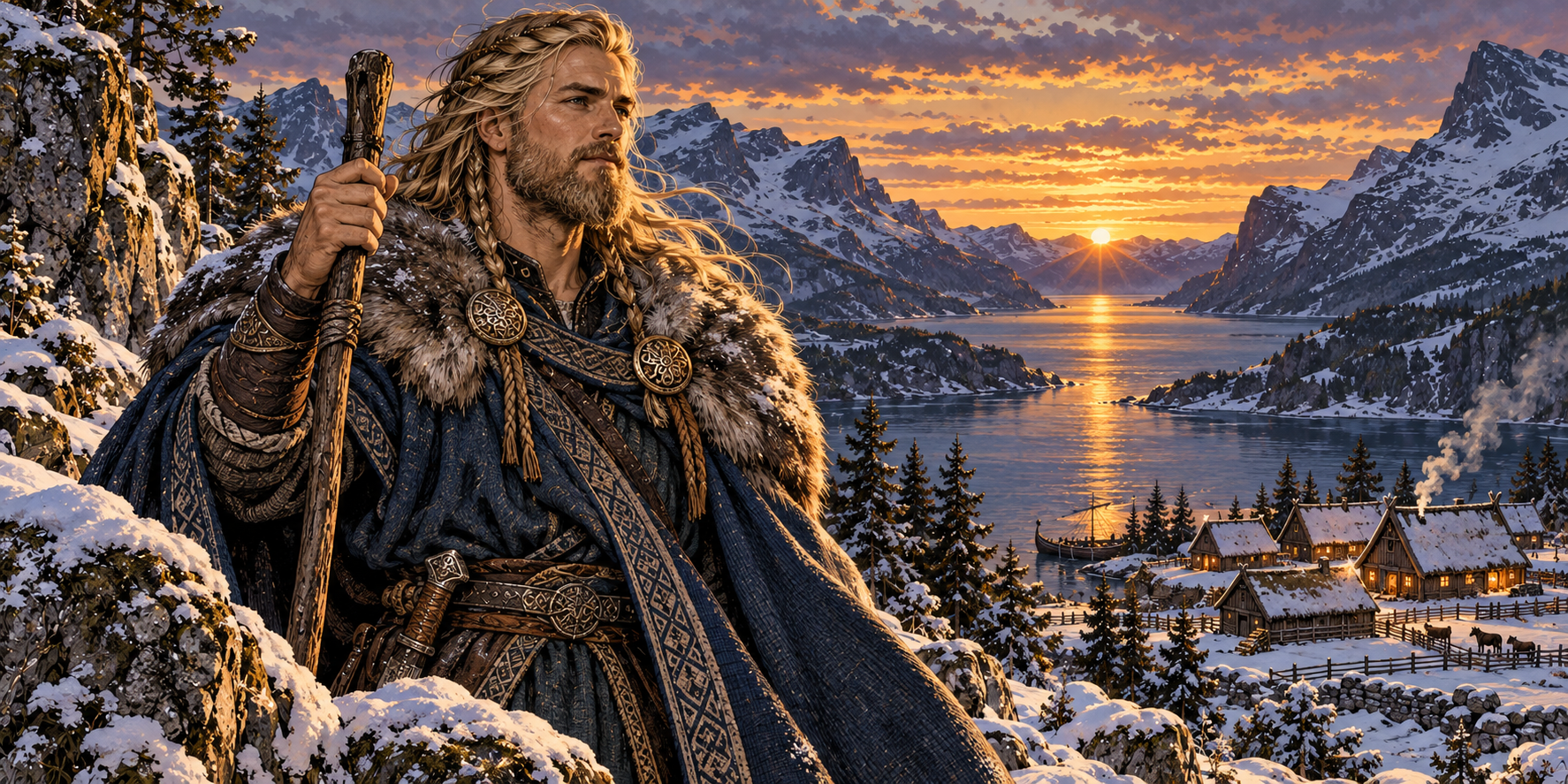
The stories of sky and feast
Winter Solstice
Winter Solstice. The Sun reaches the end of its southern journey.
The low arc
Across the northern world, winter draws the Sun close to the horizon. Its daily passage grows short, its light falls at a shallow angle, and darkness takes more of the day. At the winter solstice that seasonal journey reaches its turning point. The northern year has its shortest daylight; the lengthening of days begins again as Earth's tilted axis carries the hemisphere towards a different relationship with the Sun.
The turning is small at first. A household still faces winter's cold, its stored supplies and the work of keeping people and animals alive. The solar landmark gives that dark stretch a direction: the light's retreat has reached its limit.
A course watched and remembered
Norse narrative gives the Sun a persona, Sól, whose movement belongs to the order and danger of the sky. Northern observers also studied the real course of light. The medieval astronomical text attributed to Star-Oddi discusses solstices and the Sun's direction; counted time and the visible year had to meet for seasonal reckoning to remain useful.
Sun and Moon together
LunarSolar uses the winter solstice as an anchor for its lunar year. Þorri begins at the first new moon afterwards, and Jól opens at the first following full moon. The Sun's turning, a new month and a midwinter gathering take their own places in the calendar. Together they make a winter world that can be read through both skies.
Sources
Royal Observatory Greenwich, winter solstice; Thorsteinn Vilhjálmsson, northern time-reckoning and Star-Oddi; Gylfaginning, chapter 11.