 LunarSolar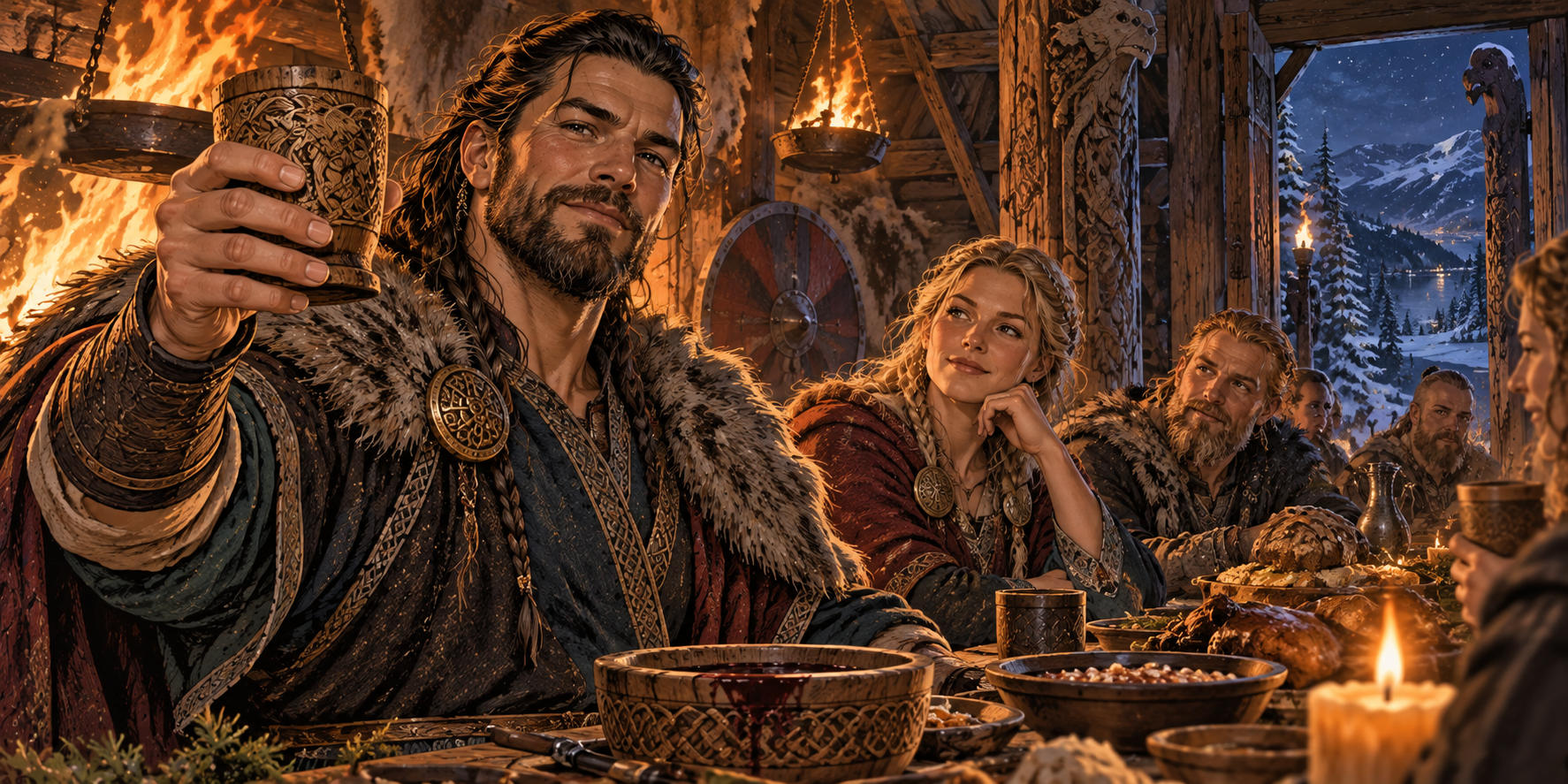
The stories of sky and feast
Jól
Yule
Jól. Ale, sacrifice and the company of the living and dead.
A feast worth preparing for
Midwinter brought people together around food and drink while the world outside offered little warmth. Preparing a great feast meant having something to give: meat, grain for ale, shelter and room for guests. A generous host made his standing visible at the table. The welcome could feed friendship, obligation and the reputation of a household long after the gathering ended.
Snorri's account of Hákon the Good places Jól inside a struggle over Norway's religion. He describes an earlier three-night midwinter observance and a king who moved its beginning to Christian Christmas. Brewing ale became a legal obligation. The feast mattered enough for its timing and participation to become political questions.
What passed around the fire
The same saga describes sacrificial meals with slaughtered animals, including horses, blood applied to sacred surfaces and people, and meat cooked over the hall's fires. Toasts addressed Óðinn for victory and royal power, then Njǫrðr and Freyr for prosperous seasons and peace. Memorial cups remembered relatives buried in mounds. The dead still had a place in the speech of the living.
For Hákon, eating the ritual meat meant more than accepting dinner. His Christian allegiance collided with the farmers' insistence that a ruler uphold their worship. Jól's warmth belonged to a world where generosity, divine favour and authority could demand something from everyone present.
Midwinter in LunarSolar
Here Jól begins with the first full moon after the winter solstice. The moving feast brings the winter Sun and the bright Moon into the same calendar story: darkness outside, provision within, and another year to sustain.
Sources
Hákonar saga góða, chapters 13–18, Finlay–Faulkes translation.